
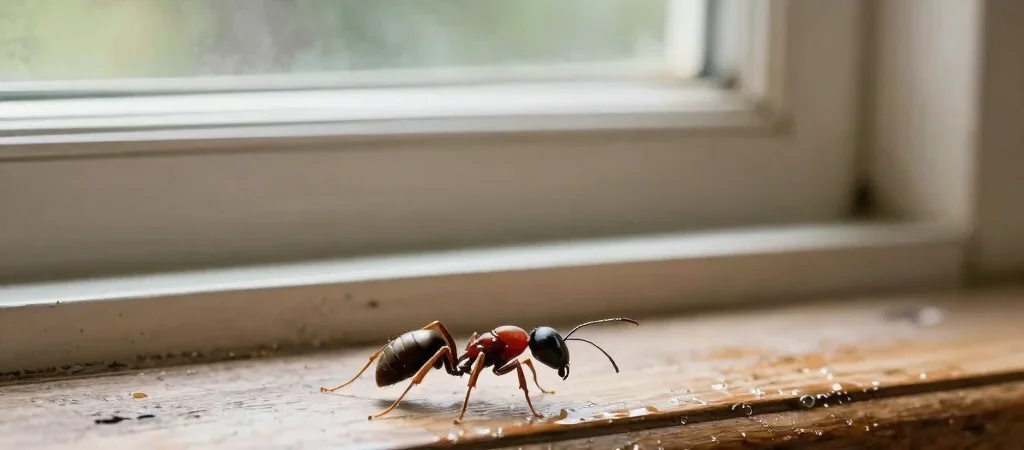
A large, dark ant crosses the bathroom floor after a rainy night. It could be a carpenter ant, but seeing one indoors does not by itself prove there is a nest in the wall. The useful clues are the ant’s appearance, repeated activity, and the condition of nearby wood.
Check the identification clues
Carpenter ants are often larger than many common house ants, but size alone is not a dependable identification. Take a close photo if possible and compare its shape and color with a trusted ant identification guide. Note where you found it and whether you see similar ants elsewhere in the home.
Inspect for moisture nearby
Carpenter ants excavate galleries in wood rather than eating the wood for food, and damp or softened areas are worth a closer look. Check around window frames, roof edges, bathrooms, and plumbing for leaks, staining, or wood that feels damaged. These signs can have other causes, so treat them as reasons to investigate—not proof of carpenter ants.
Notice the activity pattern
Record where ants appear and whether the sightings repeat, especially after dark or near a consistent opening. A few scattered workers can have a different explanation from recurring traffic or piles of coarse, sawdust-like material beneath wood. Avoid sealing a suspected route before you understand where the ants may be traveling.
Address the conditions too
Repairing a leak and replacing damaged wood can remove conditions that attract or support ant activity, but it may not resolve an established nest on its own. If signs keep returning or the affected area is hard to inspect, a qualified pest professional can help confirm the identification and locate the source. Keep your photos and notes; they make the conversation more specific.