
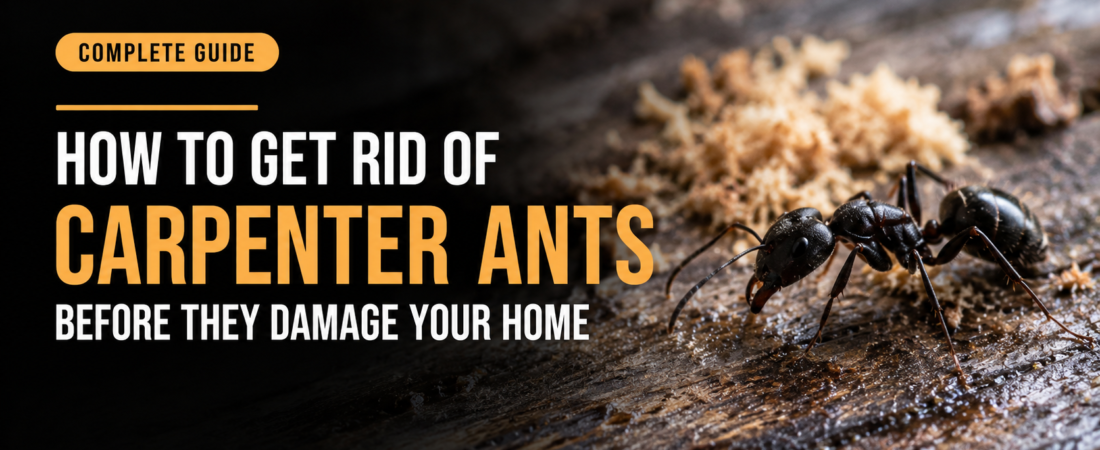
A pile of what looks like fine sawdust under a windowsill is usually the first clue, and most homeowners walk right past it. It isn’t sawdust. It’s frass, a mix of wood fragments and insect debris that carpenter ants push out of the galleries they hollow out inside damp or damaged wood. By the time you notice it, the colony has often been active for a long time.
Carpenter ants are one of the few common household ants where waiting can cost you real money, because they excavate wood to build their nests rather than simply passing through it. This guide covers how to identify them correctly, where the nests actually are (usually more than one, and often outdoors), how to bait them in a way that works, and when the damage means it’s time to bring in a professional.
The Short Version
- Carpenter ants usually live in two kinds of nests: a parent colony (with the queen), often outdoors in a stump, tree, or woodpile, and one or more satellite colonies, often indoors in damp wood.
- Finding the nests matters more than the product you buy. If you only treat the ants you see, they typically reappear within days or weeks.
- Offer both a sweet bait and a protein bait. Their food preference shifts through the season.
- Fix the moisture problem, but know that a colony can linger in wood that was wet before the leak was repaired.
- If you find frass inside a wall, floor, or beam, call a professional sooner rather than later.
How to Tell Carpenter Ants From Other Household Ants
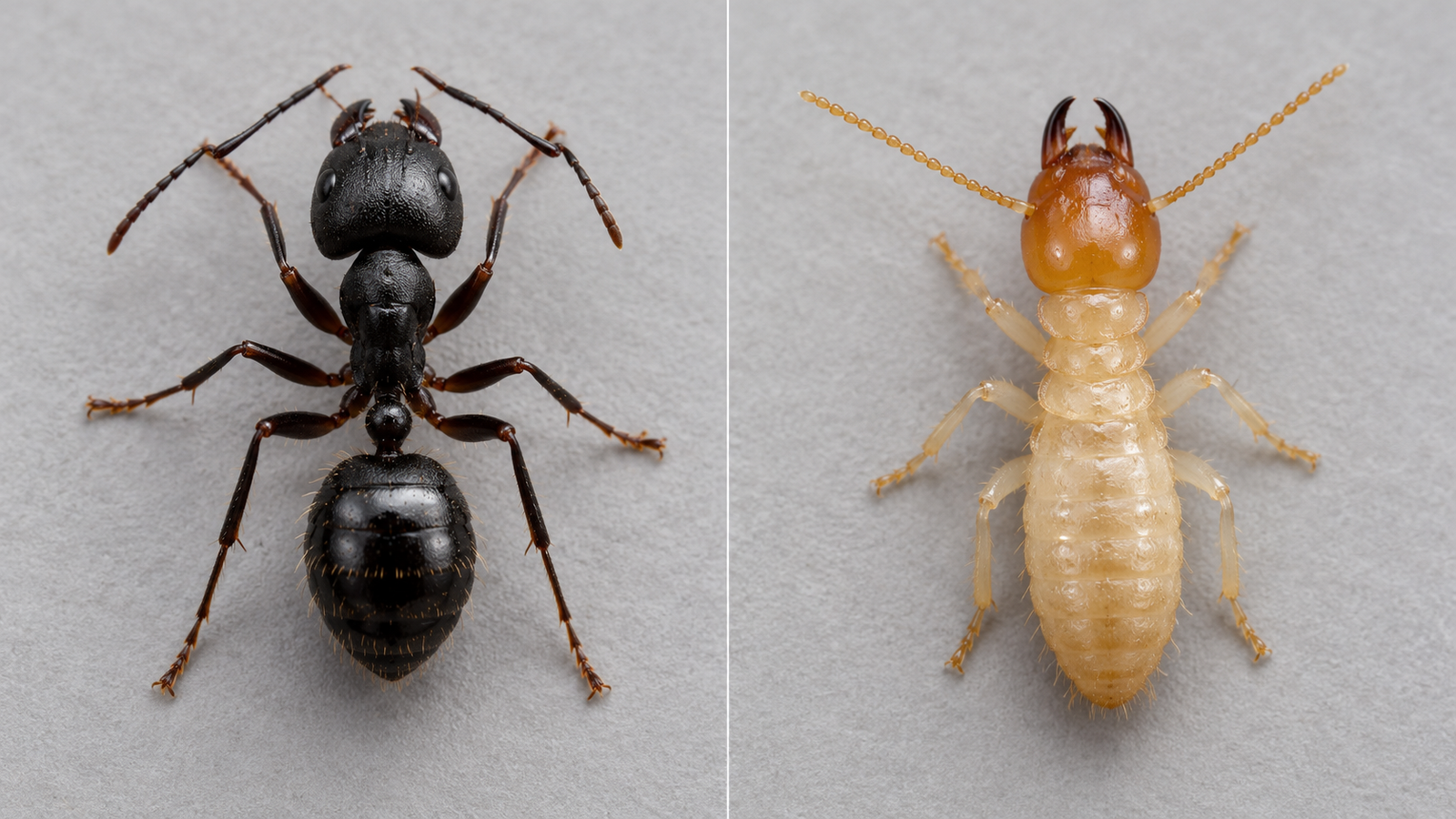
Carpenter ants are noticeably larger than most nuisance ants, typically a quarter to half an inch long, and range from solid black to a reddish-black combination. Their waist is pinched and their antennae are bent, not straight, which is the fastest way to rule out termites if you’re finding both frass and winged insects near a window frame. They’re also most active at night: workers generally leave the nest in the late afternoon or evening, forage after dark, and return in the early morning.
If you’re not sure whether you’re dealing with carpenter ants or a smaller trailing species like odorous house ants, the complete ant removal guide covers identification across every common species side by side, and the sugar ants in the kitchen guide covers the small, sweet-seeking ants people most often confuse them with.
Carpenter Ants vs. Termites: The Details That Matter Most
| Signal | Carpenter Ants | Termites |
|---|---|---|
| Waist shape | Pinched, visibly narrow | Straight, no visible pinch |
| Antennae | Bent (elbowed) | Straight, beaded |
| Wing length (if winged) | Two pairs, unequal length | Two pairs, equal length |
| Gallery interior | Smooth and clean, like sandpapered wood | Often packed with mud (subterranean termites) |
| Debris | Dry wood shavings (frass) pushed out | Mud tubes (subterranean) or tiny pellets (drywood) |
| What they do to wood | Excavate it to nest, don’t eat it | Consume the wood for food |
This distinction matters because the treatments aren’t interchangeable. Termite treatments target soil and foundations; carpenter ant treatments target the nests and the moisture source that attracted them. If you’re not certain which one you have, a professional inspection is worth it before you spend money on the wrong product.
Why Carpenter Ants Choose Your Home
Carpenter ants strongly prefer wood that’s already softened by moisture, whether from a roof leak, a plumbing issue, poor drainage around the foundation, or old water damage that was never fully dried out. Extension entomologists note that they seldom tunnel into dry, sound wood, though they can occasionally nest in it, which is why carpenter ant activity is often a secondary signal of a moisture problem the homeowner didn’t know about yet. (Sources: Penn State Extension, University of Nebraska-Lincoln Extension)
Parent Colonies vs. Satellite Colonies
This is the single most important thing to understand about carpenter ants, because it’s the reason most DIY treatments fail.
| Parent Colony | Satellite Colony | |
|---|---|---|
| Contains the queen? | Yes, she always stays here | No |
| Contains eggs and young larvae? | Yes | No (workers, older larvae, and pupae only) |
| Typical location | Outdoors: tree, stump, log, woodpile, landscape timbers | Often indoors: damp wood, wall voids, sometimes insulation or hollow doors |
| Needs moisture? | Usually, yes | Often, but can survive in relatively dry spots |
Workers travel back and forth between the two along scent trails. Extension sources report that the parent colony is often within about 100 yards of the house, and that to eliminate the ants, both the parent and satellite nests must be found. Otherwise they reappear in a few days or weeks. (Source: Penn State Extension)
Don’t assume your house is infested. Seeing a few carpenter ants indoors doesn’t automatically mean they’re nesting in your walls. They may be nesting outdoors and only foraging inside. But if you’re seeing them in large numbers, during the day, or very early in spring before food is available outside, an indoor satellite colony becomes more likely.
Signs of a Carpenter Ant Infestation
☐ Small piles of frass (wood shavings) near baseboards, window sills, or wall voids
☐ A faint rustling sound inside a wall, especially at night
☐ Winged ants (swarmers) appearing indoors, typically in spring
☐ Large black or reddish-black ants trailing at dusk or after dark
☐ Hollow-sounding wood when tapped near suspected nest areas
☐ Ants near a known or suspected moisture source (roof leak, old water stain, leaky pipe)
☐ Ants showing up repeatedly in bathrooms, kitchens, or around windows
What You’re Seeing, and What It Probably Means
| What you’re seeing | What it likely means | What to do first |
|---|---|---|
| A few large ants indoors at night, no frass | Foragers from an outdoor nest | Follow the trail outside; check stumps, trees, and firewood |
| Frass piles under a window or baseboard | An active nest entrance nearby | Probe and tap the wood; look for moisture; consider a pro |
| Winged ants indoors in spring | A mature colony nearby, possibly inside | Inspect closely; call a pro if you find frass or damage |
| Many ants indoors during the day | A sizable colony, likely a satellite indoors | Place baits along trails and look for the nest |
| Rustling in a wall | A nest inside a wall void | Don’t open it yourself; call a professional |
How to Get Rid of Carpenter Ants: Step by Step
Step 1: Locate the Nests, Inside and Out
Don’t just treat where you first see ants. Carpenter ants forage at night and follow distinct scent trails between nests and food, so following those trails is more reliable than guessing.
Inside, look for frass piles, moisture-damaged trim, and hollow-sounding wood near window frames, door frames, bathrooms, kitchens, and anywhere plumbing runs through walls. Outside, check the places a parent colony is most likely to be: tree stumps, dead branches, old logs, landscape timbers, firewood stacks, fence posts, and any tree touching or overhanging the roof. Wait until dusk with a flashlight, watch where the ants travel, and follow them. Ants baited inside can also lead you to a parent nest outdoors, and indoor treatment alone often fails if the outdoor colony is never found. (Source: University of Arkansas Extension)
Step 2: Use Bait, and Offer Both Sweet and Protein
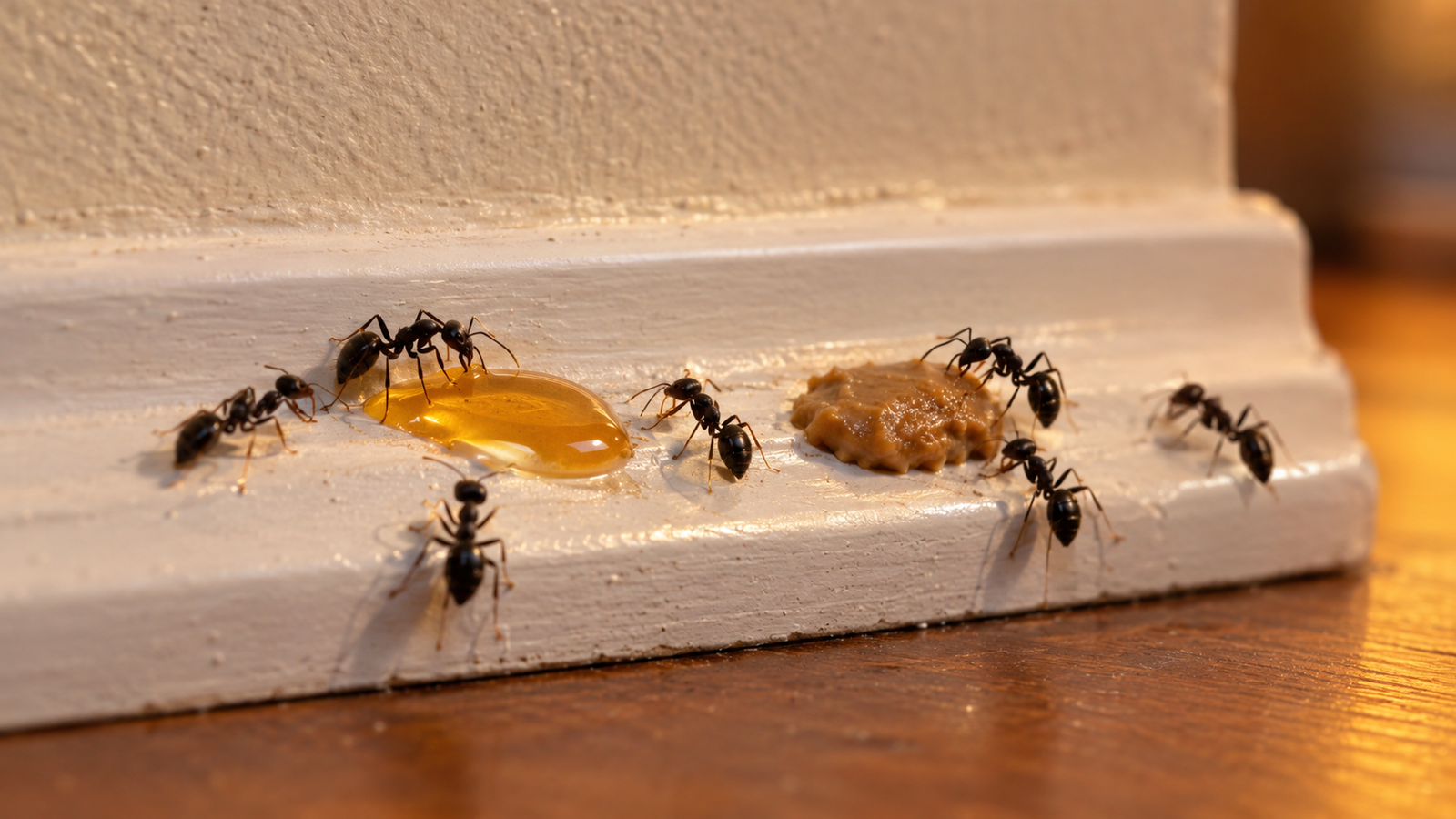
A slow-acting bait that workers carry back to the colony is far more effective than a spray that only kills what’s visible, because the bait can reach the parent colony and the queen through food sharing.
What bait to choose is where many guides oversimplify. Carpenter ant food preferences shift through the season. Research on black carpenter ants found that they favored protein in spring and sugar in fall, and the researchers concluded that using different bait types is important for control. (Source: Journal of Economic Entomology, 2000) In practice:
- Put out two small dabs side by side, one sweet gel bait and one protein or fat-based bait, near an active trail.
- Watch which one the ants carry over the next few hours (after dusk, since they forage at night).
- Use the one they take, and switch if they lose interest later in the season.
- Place baits along trails and near suspected nest areas, not scattered where ants won’t encounter them.
- Keep baits away from children and pets, using enclosed stations where possible.
For product types and what to look for, the best ant killers and baits comparison breaks down gel, station, and granular options.
Step 3: Address the Moisture Source
This step is what separates a lasting fix from a temporary one. Repair leaks, clean gutters, improve drainage away from the foundation, replace wood that’s soft or rotted, and let the area dry fully before sealing it up.
One honest caveat: fixing the leak doesn’t guarantee the ants leave. A colony can continue living in wood that was previously wet, and satellite colonies can survive in relatively dry spots. Moisture repair prevents new colonies; baiting and nest removal deal with the existing one.
Step 4: Give It Time, and Don’t Spray the Stragglers
Spraying visible ants can break up the trails that carry bait back to the nest. Instead, watch the trend. A typical timeline looks like this:
| When | What’s normal | What it means |
|---|---|---|
| Days 1 to 3 | More ants feeding at the bait | Good sign: they’re taking it |
| Weeks 1 to 2 | Activity gradually drops | Bait is spreading through the colony |
| Weeks 3 to 4 | A few stragglers, then very little | Colony is collapsing; keep baits out |
| After 4 weeks, no change | Bait ignored or the nest wasn’t reached | Switch bait type, re-check outdoors, or call a pro |
Step 5: Remove the Outdoor Sources
Once the colony is under control, reduce what let it establish: remove or treat stumps and rotting logs near the house, move firewood off the ground and away from the structure, and cut back branches touching the roof or siding.
What If the Ants Ignore the Bait?
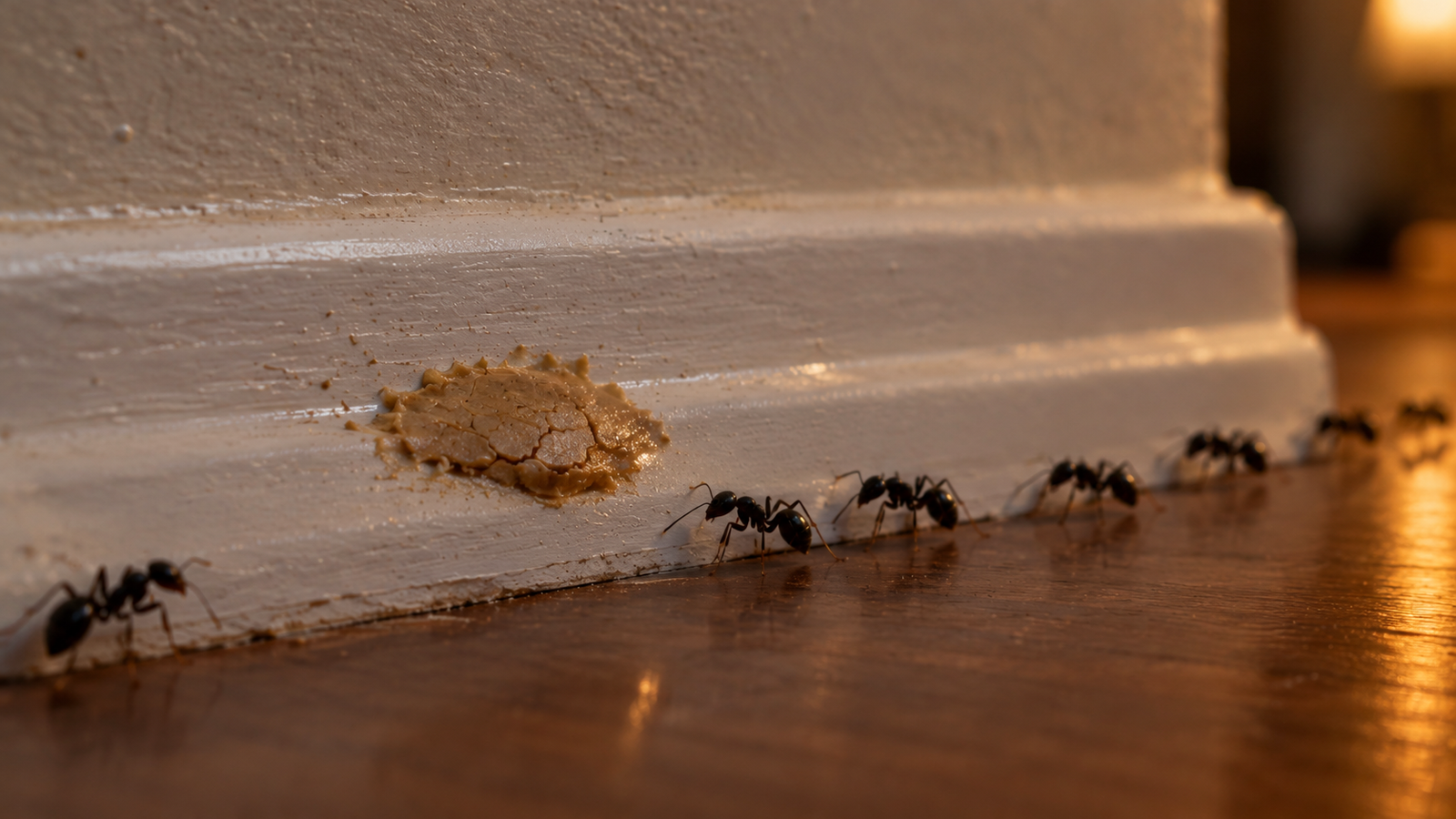
This is a common frustration, and it usually has one of a few causes:
- Wrong bait for the season. Swap sweet for protein, or the reverse, and test side by side again.
- Competing food. If there’s honeydew from aphids on nearby plants, pet food, or crumbs, the ants may prefer it. Remove what you can.
- The bait dried out. Carpenter ants favor moist baits; a hard, dry surface may be ignored. Replace it with fresh bait.
- You’re baiting the wrong spot. Re-check where the trail actually runs, at night.
- Only a small share of the colony forages at any time, so results take patience; a few days of light feeding doesn’t mean it failed.
Be Realistic About What DIY Can Do
Baits can reduce or even eliminate a carpenter ant colony, and for a small problem with a findable nest, a careful homeowner can succeed. But extension entomologists are candid that satellite colonies hidden in wall voids are difficult to eliminate without the products and tools professionals use. If you’ve done the steps above and activity continues, you’re not failing at DIY; you’ve reached its limit.
Prevention Checklist
☐ Repair roof, plumbing, and window leaks promptly
☐ Keep gutters clean and downspouts draining away from the house
☐ Trim branches so they don’t touch the roof or siding
☐ Store firewood off the ground and away from the house
☐ Remove old stumps and rotting wood near the foundation
☐ Seal gaps around utility lines, pipes, and window frames
☐ Check crawl spaces, attics, and under sinks for moisture each spring
When Carpenter Ants Mean It’s Time to Call a Professional
Carpenter ants are the species where DIY has the clearest limit. Call a professional if you find frass or damage inside a wall, under a floor, or in a structural beam, if you hear rustling in a wall, if you see swarmers indoors, or if bait hasn’t helped after about four weeks. A licensed technician can use moisture meters and borescopes to locate nests without opening up walls unnecessarily, and can assess whether any structural repair is needed. The when to call a professional exterminator guide covers the specific thresholds, and ant exterminators near you can connect you with vetted local providers for a quote.
If ants keep returning after treatment, the why ants keep coming back guide walks through the six most common reasons. If you’re weighing non-chemical options first, see natural ant killers, keeping in mind that homemade remedies are best for light activity. And if the ants in your yard are building mounds instead, you’re likely dealing with fire ants, which need a completely different approach.
Your Next Steps
Carpenter ants reward speed more than most household pests, since the longer an active colony sits in damp wood, the more repair work waits on the other side. Find the nests (inside and out), offer both sweet and protein bait, fix the moisture problem that invited them in, and give treatment about four weeks before judging the results. If you’re finding frass inside a wall or suspect a satellite colony you can’t reach, that’s the point to bring in a professional rather than keep guessing.
Frequently Asked Questions
Do carpenter ants mean I have termites too?
Not necessarily, but both pests are drawn to moisture-damaged wood, so it’s worth checking for termite signs (mud tubes near the foundation, or tiny pellets) while you’re addressing the carpenter ants.
Can carpenter ants cause serious structural damage?
Yes, over time, though they work more slowly than termites since they excavate rather than eat the wood. Long-standing, untreated colonies can still weaken beams, window frames, and other structural wood.
What attracts carpenter ants to a house?
Moisture-damaged or softened wood is the primary draw, often from a roof leak, plumbing issue, or poor drainage. Nearby stumps, firewood, and trees touching the house also give parent colonies a place to establish close by.
How do I find a carpenter ant nest I can’t see?
Watch trails at dusk with a flashlight and follow them, look for frass piles, tap suspicious wood for a hollow sound, and check stumps, logs, and woodpiles outdoors. A professional with a moisture meter or borescope can locate hidden nests more reliably.
Does seeing carpenter ants inside mean my house is infested?
Not always. They may be nesting outdoors and simply foraging inside. Large numbers, daytime activity, frass, or swarmers indoors make an indoor nest more likely.
Will killing the ants I see get rid of the whole colony?
No. Visible ants are foragers, not the colony. Bait carried back to the nest is needed to reach the queen, and both the parent and satellite colonies have to be eliminated for the problem to stay solved.
What bait works best on carpenter ants?
There isn’t one best bait for every season. Carpenter ants shift between protein and sugar, so offer a sweet bait and a protein bait side by side and use whichever they take.
How long does it take to get rid of carpenter ants?
Often two to four weeks of baiting for a small, reachable colony. Hidden satellite nests and structural repairs can take longer.