
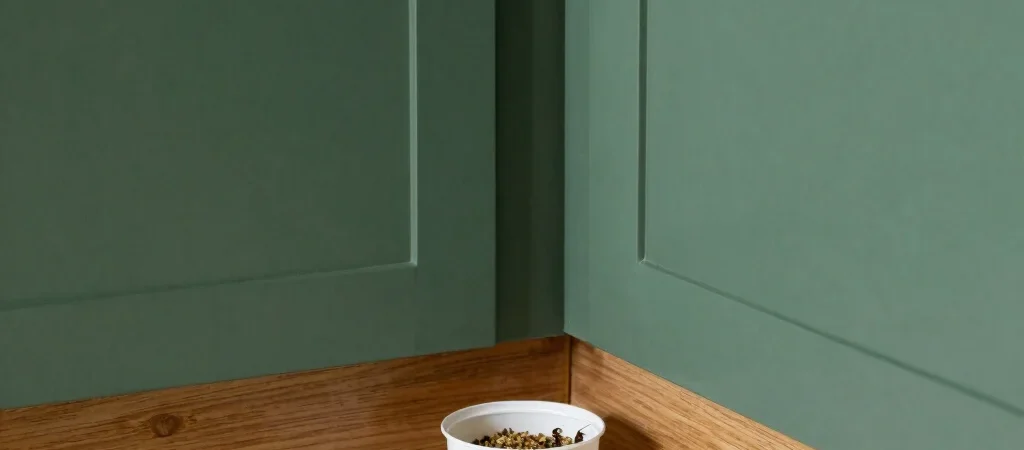
You find a steady line of ants along the baseboard and set bait on the other side of the room. It may never meet the trail. If you choose a bait product, placement, patience, and careful label-following matter more than putting it everywhere.
Start with the route
Observe where ants travel and place bait only where the product label allows and where children and pets cannot reach it, as directed. The route may lead beside a cabinet, near a threshold, or along a wall rather than across an open floor. Keep bait away from food-preparation surfaces unless the label specifically permits that placement.
Let the bait be accessible
Ants need to find and reach the bait, so avoid covering it or cleaning directly over it. Follow the label for how much to use, where to put it, and when to replace or dispose of it. Don’t spray insecticide on or near the bait unless its directions say to; that can interfere with ants reaching it.
Expect activity to change
Some ant baits are designed to be carried back by worker ants, so activity may continue while ants are visiting the bait. That does not mean you should add more or move it every few hours. Check the product directions and observe whether the trail is changing over the period they recommend.
Pair treatment with prevention
Store food securely, clean sticky residues, address drips, and note gaps around pipes or doors while you monitor the route. A bait that attracts one kind of ant may not be accepted by another, so a lack of interest is a reason to reassess the identification and product directions. Keep the label, and contact a qualified professional if activity persists or you’re unsure how to proceed.